




















 Loading...

Introduction to the Agile World of Banana Joe Triple Jump
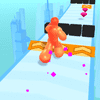
In the vibrant and fast-paced universe of browser-based runner games, few titles manage to combine intuitive controls with a genuinely challenging and competitive thrill quite like Banana Joe Triple Jump. Released in May 2022, this dynamic game puts your agility to the test, challenging you to guide a character through a series of obstacles using a unique triple-jump mechanic. Available to play directly in your browser on both desktop and mobile devices in portrait orientation, Banana Joe Triple Jump offers a compelling and addictive experience where timing, precision, and patience are the keys to success.
The game's premise is elegantly simple and immediately engaging: you control Joe, who must navigate an endless path filled with various obstacles. Your primary tool is the ability to perform up to three sequential jumps in quick succession. This triple-jump mechanic is the core of the game, allowing you to clear gaps, leap over barriers, and avoid hazards. The challenge lies in mastering the timing of these jumps and learning when to use one, two, or all three to overcome the obstacles that appear with increasing frequency. With a community rating reflecting its solid reception, Banana Joe Triple Jump has established itself as a go-to destination for players seeking a pure, skill-based reflex challenge.
What truly sets Banana Joe Triple Jump apart is its focus on a single, refined mechanic and its emphasis on personal improvement. The game offers intuitive controls—a simple tap to jump—making it accessible to anyone, yet achieving a high score requires intense concentration and a deep understanding of the game's rhythm. The game's description highlights this, noting that it offers "intuitive controls and a continuous challenge to top your personal best, adding a layer of competitive thrill to each run." This focus on self-improvement and the pursuit of a high score is a powerful motivator. Whether you're a casual player looking for a fun way to pass the time or a dedicated gamer seeking to climb the leaderboard, this comprehensive guide is designed to provide you with the strategies, techniques, and insights needed to become a true Banana Joe Triple Jump master.
Understanding the Core Gameplay Mechanics
At its heart, Banana Joe Triple Jump revolves around a simple but demanding core loop: tap the screen to execute jumps, up to three in quick succession, and watch for incoming obstacles to avoid losing the game. The controls are beautifully minimalist—a simple tap on the screen is all it takes to make Joe jump. This simplicity ensures that anyone can begin playing immediately, yet the depth of the challenge reveals itself as players strive to master the timing and rhythm of the triple jump.
The primary mechanic is the triple jump. In most runner games, you have a single jump. Banana Joe Triple Jump distinguishes itself by allowing you to perform up to three jumps in quick succession. This mechanic is not just a gimmick; it is essential for navigating the game's obstacles. Some barriers may require a single jump, while others might require a double or even a triple jump to clear safely. Understanding when to use each jump is the key to survival. The game's description notes that you should "guide your character with up to three sequential jumps to navigate obstacles."
The progression system in Banana Joe Triple Jump is score-based. The game is an endless runner; there are no levels or checkpoints. Your goal is to survive as long as possible and achieve the highest score. As you run further, the game speeds up, and obstacles appear more frequently and in more complex patterns. This escalating difficulty ensures that the game remains engaging and appropriately challenging for players of all skill levels. The clear goal of beating your personal best provides a strong motivator for continued play and improvement.
Mastering the Art of the Triple Jump and Timing
Success in Banana Joe Triple Jump depends on your ability to master the timing of your jumps and make quick decisions under pressure. The game's escalating speed and the variety of obstacles require you to think and act quickly, but also to maintain precision and patience.
The Fundamentals of the Single Tap Jump
The first step to mastering Banana Joe Triple Jump is developing a feel for the basic jump. A single tap makes Joe jump a fixed height. This is your primary tool for clearing low obstacles and small gaps. Practice getting the timing right for the single jump. As one guide for similar games advises, "A calm and controlled tap is more effective than a frantic one." Learn the rhythm of the game and how a single jump feels.
Utilizing the Double and Triple Jump
The game's core challenge is knowing when to use the double and triple jumps. A double jump allows you to stay in the air longer, clearing larger gaps or higher obstacles. A triple jump gives you maximum air time and distance. However, each jump consumes one of your precious three jumps. You must manage your jumps carefully. For example, you might use a triple jump to clear a series of high barriers, but this leaves you with no jumps for a short time, which can be risky. Understanding the cost-benefit of each jump is crucial.
Timing is Critical
The game's description emphasizes that "timing is critical; jumping at the right moment is crucial for survival." This cannot be overstated. Tapping too early or too late can send Joe crashing into an obstacle. The key is to watch the obstacle's position and time your jump so that Joe's arc carries him safely over it. This requires focus and practice. As the game's tip suggests, "Patience and precision often yield better results than recklessness." A well-timed double jump is more effective than a panicked triple jump.
Adapting to Increasing Speed
As your score increases, the game speeds up. This means you have less time to react to obstacles and must make quicker decisions. Adapting to this increasing speed is a key skill. As the game gets faster, your timing must become more precise. Your decisions about which jump to use must be made almost instantly. Practice is the only way to improve your speed and accuracy. Developing a "rhythm" with the game's pace can help you anticipate when obstacles will appear.
Advanced Strategies for High Scores and Survival
Achieving high scores in Banana Joe Triple Jump requires the implementation of advanced strategies that maximize your chances of survival.
The "Jump Economy" Strategy
This strategy involves managing your jumps efficiently. The goal is to use the minimum number of jumps necessary to clear an obstacle. For example, if a single jump will clear an obstacle, use one jump. Save your double and triple jumps for situations where they are absolutely required. By conserving your jumps, you ensure you always have the tools you need when a truly difficult obstacle appears. This conservative approach is a hallmark of expert play.
The "Pattern Recognition" Method
While the obstacles appear in an endless, random sequence, players may notice patterns over time. The game's algorithm may produce certain patterns of obstacles (e.g., a low barrier followed by a high one). By learning these patterns, you can anticipate what type of jump will be needed and prepare accordingly. This pattern recognition is a powerful tool that can give you a significant advantage.
The "Rhythm and Flow" Approach
Banana Joe Triple Jump, like many runner games, has a rhythmic quality. By tapping in a steady rhythm, you can move through the game more efficiently. This rhythmic approach can turn a chaotic scene into a manageable and almost musical experience, allowing for smoother and more controlled play. It also helps maintain focus and prevents the frantic tapping that leads to mistakes.
The "Risk Management" Tactic
The game presents a constant risk-reward calculation. Every jump carries a risk, as a mistimed jump means a collision. More aggressive players might try to jump as late as possible, which can be effective but is also risky. More cautious players might jump a little earlier, which is safer but might not be as efficient. The key is to find the right balance for your skill level. As you improve, you can take more risks.
The Psychology of Rhythm, Reflexes, and Resilience
Banana Joe Triple Jump's design is a masterclass in psychological engagement, leveraging the principles of challenge, reward, and skill development to create a deeply compelling experience.
The Flow State of Running
The game's continuous action and escalating speed can induce a "flow state," a mental state of complete absorption in the activity. In this state, players are fully focused, and their actions become fluid and automatic. This flow state is highly rewarding and is a key reason why the game is so addictive. The game's simple mechanic allows players to enter this state more easily than more complex games.
The "One More Try" Effect
The game's endless nature and high-score focus create a powerful "one more try" effect. Each failure is a learning opportunity. Players are driven to apply what they've learned in their next attempt. This loop fosters resilience and a growth mindset, as players understand that improvement comes from practice and perseverance. The game subtly teaches the value of persistence.
Building Focus and Reflexes
Banana Joe Triple Jump is an excellent tool for developing and sharpening cognitive and physical skills. It requires intense focus, rapid visual processing, and quick decision-making. Regular play can help sharpen these skills, which are valuable in many areas of life. The game demands a state of "mindfulness" where the player is fully engaged in the moment.
Comparison with Similar Games
Banana Joe Triple Jump occupies a specific niche within the runner genre, sharing elements with other endless runner games while maintaining a distinct identity.
Similarities to Classic Endless Runners
Like iconic games such as "Temple Run" or "Subway Surfers," Banana Joe Triple Jump is an endless runner where the goal is to survive as long as possible. However, Banana Joe Triple Jump's vertical, forward-facing perspective and its unique triple-jump mechanic set it apart from 3D runners with multiple lanes and swipe controls.
Comparisons to Tap-to-Jump Games
The tap-to-jump mechanic is reminiscent of games like "Flappy Bird" or "Doodle Jump." However, Banana Joe Triple Jump's forward-running perspective and its triple-jump mechanic offer a different challenge. The need to manage multiple jumps adds a layer of strategic depth that is absent in simpler one-jump games.
Distinctions from Traditional Arcade Games
Unlike many arcade games that have multiple objectives or power-ups, Banana Joe Triple Jump is elegantly minimalist. Its single core action—jumping—is simple to learn but provides enough depth for mastery. This focus on a pure, refined mechanic is a hallmark of the best "hyper-casual" arcade games.
Technical Aspects and Platform Performance
While the engine is not specified, Banana Joe Triple Jump demonstrates strong technical performance across both desktop and mobile platforms. The game's smooth performance is crucial for the precise timing and control required.
Cross-Platform Optimization
The controls are well-adapted for both mouse and touch inputs. On desktop, clicking the screen provides precise control. On mobile, the touch controls are intuitive and responsive, making the game ideal for on-the-go play. The portrait orientation requirement provides an optimal view of the running path, allowing players to see obstacles well in advance.
Visual and Audio Design
The game features a dynamic and engaging visual style. The clear distinction between the character and the obstacles is essential for gameplay. The audio design likely provides satisfying sound effects for jumping and collisions, enhancing the immersive experience.
Updates and Stability
The release in May 2022 and the subsequent update in June 2022 indicate a commitment to a polished, stable experience. This technical reliability ensures that players can focus on the gameplay without being frustrated by bugs or performance issues.
Common Mistakes and How to Avoid Them
Awareness of common pitfalls can significantly accelerate your improvement in Banana Joe Triple Jump.
Mistake: Wasting Jumps
A common mistake is to use all three jumps unnecessarily. This leaves you with no jumps for the next obstacle. Always use the minimum number of jumps required. Conserving your jumps is key to survival.
Mistake: Panic Jumping
Another frequent error is to tap frantically in response to an obstacle, leading to mistimed jumps and collisions. The solution is to maintain a calm and controlled approach. A precise tap is always better than a panicked one.
Mistake: Not Looking Ahead
Focusing too intently on the immediate obstacle while ignoring the ones coming next is a common pitfall. This leads to being surprised by the next threat. Maintain a broad awareness of the screen, looking ahead to anticipate future obstacles.
Mistake: Getting Frustrated
The game's increasing difficulty can be frustrating. Giving in to frustration leads to poor performance. If you feel frustrated, take a short break. Return with a clear mind and a fresh perspective.
Conclusion: Why Banana Joe Triple Jump is a Must-Play Reflex Challenge
Banana Joe Triple Jump stands as a brilliant example of how a simple, well-executed concept can create a deeply engaging and addictive arcade experience. Its unique combination of a minimalist tap-to-jump mechanic and the strategic depth of the triple jump makes it a compelling choice for a wide range of players. The game's success lies in its ability to provide a clear, immediate challenge that players can continuously improve upon, with each run offering a fresh opportunity to refine their reflexes and strategies.
For players seeking a game that offers genuine skill-based challenge, the thrill of the endless run, and the satisfaction of personal improvement, Banana Joe Triple Jump is an outstanding choice. Its intuitive controls ensure that newcomers can start playing immediately, while its escalating difficulty provides continuous learning opportunities for experienced players. The fast-paced and competitive nature of the game makes it perfect for quick breaks or longer sessions.
Whether you're looking to sharpen your reflexes, test your timing, or simply enjoy a high-energy and engaging arcade experience, Banana Joe Triple Jump delivers on all fronts. Its blend of simplicity, strategy, and challenge makes it a title that is easy to pick up and difficult to put down. So, get your fingers ready, focus on your timing, and prepare for the dynamic challenge of Banana Joe Triple Jump. The obstacles are waiting—are you ready to jump over them all?
Embed this game